
This information is from an email I received today from Mike Fave. He is an expert in metabolic health and I follow him routinely. He’s entirely science-based and does all the “sciencey” research so those of us not trained in medical science are relieved of that task.
He has a podcast on all the platforms — I listen on Spotify HERE. (He’s also a frequent guest on other podcasts.) He’s a brainiac so podcasts can be filled with words I have had to look up, but you will get the gist of it. Very worth pursuing if you are interested in metabolic health!
Here’s what he sent this am:
Quote from the research paper
The layperson’s translation is under this quote and complete definitions (*) are at the bottom.
"MDA* [oxidative stress] level was found to be considerably increased in BPA-exposed impaired mice as compared to the control group in hippocampus region of brain (p < 0.01). The treatment with Ws [Withania somnifera = Ashwagandha] on the other hand decreased the MDA level in the BPA group. The reactive oxygen species (ROS) produced in the hippocampus was also efficiently scavenged by the anti-oxidative enzymes such as SOD** and catalase***. In our result, Ws was found to modulate the activity of antioxidant enzymes. The catalase level was significantly reduced (p < 0.01) in BPA group as compared to control group within hippocampus. Interestingly, Ws was found to significantly restore the levels of catalase in BPA intoxicated mice (p < 0.05). While, in the case of BPA-exposed mice, activity of SOD was found to be significantly decreased (p < 0.001) as compared with that of control group. However, on Ws treatment, the activity of SOD was seen to be significantly elevated in comparison to BPA-exposed mice p < 0.05."
Translation
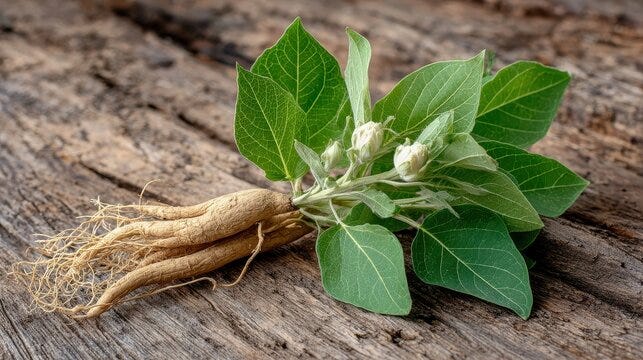
BPA, the known plasticizer endocrine disruptor, increased a marker of oxidative stress known as MDA in the brain of rats. The herb Ashwagandha decreased the oxidative stress in the brain and thus the MDA level. The herb Ashwagandha decreased the oxidative stress by increasing the function of the anti-oxidant enzymes superoxide dismutase (SOD), and catalase.
Relevance
Besides inducing hormonal changes, the endorcine disruptor BPA also induces direct damage to brain tissue by increase oxidative stress via lowering the anti-oxidant enzymes. The popular ayuverdic herb, actually one of my favorites, Ashwagandha is able to rescue the brain tissue from the oxidative stress. Also, although not listed here, Ashwagandha increases thyroid function, androgenic hormones, and decreases estrogens and glucocorticoids. So Ashwagandha seems to block the effects of BPA at multiple sites; making it a useful tool in our arsenal to protect ourselves from pollutants and stress.
In my experience many people discount herbal products and supplements as inferior to drugs; this is an error. The plant compounds, even in everyday foods like orange juice or grapes, are quite potent physiologically. There is a plethora of research discussing the benefits of these compounds in vitro, in animals, and in humans. It's actually quite exciting to know that the glass of OJ with collagen, the fried banana, and the pastured eggs you had for breakfast are actually medicinal in nature.
Reference
Birla, H., Keswani, C., Rai, S. N., Singh, S. S., Zahra, W., Dilnashin, H., Rathore, A. S., & Singh, S. P. (2019). Neuroprotective effects of Withania somnifera in BPA induced-cognitive dysfunction and oxidative stress in mice. Behavioral and brain functions : BBF, 15(1), 9. https://doi.org/10.1186/s12993-019-0160-4
If you would like a recommendation for an Ashwaganda supplement, there are lots to choose from on Amazon. I prefer liquids or powders when I can get supplements in that form — I take enough vitamin pills. Wild and Organic is a brand I use. Gaia is also excellent although I don’t see a liquid. This is a Gaia Ashwagandha capsule, this is an Ashwagandha gummy.
Here’s to your excellent health!
xo Sally
P.S. If you are curious about other herbal compounds or how Mike specifically implements Ashwagandha with his clients, find him on his website here MikeFave.com.
Definitions
* Malondialdehyde (MDA) is a highly reactive compound formed as an end product of lipid peroxidation, the oxidative degradation of polyunsaturated fatty acids in cell membranes. It is widely used as a biomarker to assess oxidative stress, reflecting damage caused by reactive oxygen species (ROS) and free radicals. MDA can form adducts with DNA, proteins, and lipids, contributing to mutagenesis, inflammation, and cellular dysfunction.
**Superoxide Dismutase (SOD) is a crucial enzyme in the body’s antioxidant defense system, primarily recognized for its role in combating oxidative stress. It functions by catalyzing the conversion of harmful superoxide radicals—reactive oxygen species (ROS)—into less damaging molecules: oxygen and hydrogen peroxide. This process protects cells, proteins, and DNA from damage linked to aging and chronic diseases such as neurodegenerative disorders, cancer, and cardiovascular conditions.
***Catalase is a crucial antioxidant enzyme found in nearly all living organisms exposed to oxygen. Its primary function is to protect cells from oxidative damage by rapidly breaking down hydrogen peroxide (H₂O₂)—a potentially toxic byproduct of cellular metabolism—into water and oxygen. This action prevents the accumulation of reactive oxygen species (ROS), which can damage DNA, proteins, and lipids, contributing to aging and various diseases.